

Growing a New Culture for Nebraska Biotech
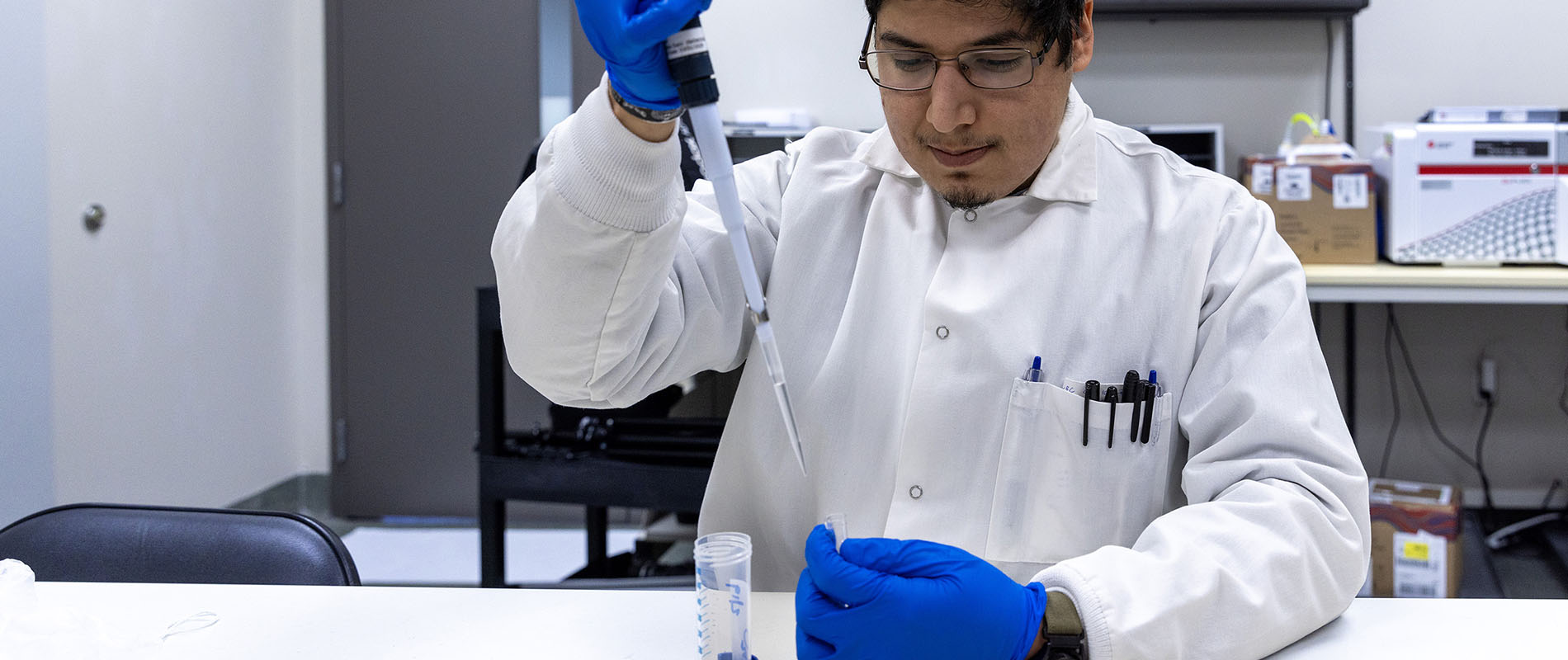





Inside a Streck laboratory, Jose Gonzales-Lara carefully verifies the labeling on blood samples before running quality-control materials through a hematology analyzer. The work requires precision, attention to detail and strict adherence to documented procedures. Every result matters.
As a quality control instrument technician, Gonzales-Lara helps ensure laboratory instruments are functioning correctly before patient samples are tested. The responsibility is one he takes seriously because accurate laboratory results ultimately affect patient care.
Just a few years ago, however, his work looked very different.
Instead of laboratory instruments and sterile environments, Gonzales-Lara spent his days on construction sites working as an electrician. Before that, he served in the U.S. Army and expected military service to be his lifelong career.
"I joined the Army right out of high school," said Gonzales-Lara, a graduate of Omaha South. "I thought I was going to be in the Army my whole life, so when I was getting out, I wasn't sure what I was going to do with myself."
His path toward biotechnology began unexpectedly when he attended a lunch-and-learn event co-hosted by Streck and Metropolitan Community College in 2023.
The field was unfamiliar, but its purpose resonated with him.
"A big aspect of my life is helping others," Gonzales-Lara said. "When I learned how biotechnology helps the world — and all the fields of opportunity — that stuck with me."
Today, Gonzales-Lara’s story represents exactly the type of workforce development education Nebraska's growing biotechnology industry needs.
During his program of study, he was hired by Streck and continued working toward his certificate while gaining industry experience. He completed the program and earned the first Streck biotechnology certificate from MCC.
His story also reflects a larger effort underway across Nebraska to strengthen the workforce pipeline supporting one of the state's fastest-growing industries.
Beginning this fall, MCC will launch an accredited associate degree in biotechnology while also offering stackable certificate pathways and workforce training options designed to meet the needs of both traditional students and adult learners.
Building Nebraska's Biotechnology Workforce
Nebraska possesses many of the ingredients needed for a thriving biotechnology sector: world-class agricultural production, leading research institutions, advanced manufacturing capabilities and innovative bioscience companies.
What employers consistently identified was missing was a sufficient pipeline of trained workers prepared for entry-level biotechnology roles.
According to Rob Owen, executive director of Bio Nebraska, a nonprofit trade association supporting Nebraska’s growing bioscience sector, workforce development has become one of the industry's highest priorities.
"If we can get into those high schools and junior highs and talk about the companies and careers that are here, those students then can see that they can stay in Nebraska," Owen said. "They can come to MCC, get trained for a short period of time and get a job right away."
To address workforce challenges, Metropolitan Community College has spent the past three years working closely with biotechnology employers throughout the region to identify the knowledge, skills and competencies required for technician-level positions.
Rather than designing a program in isolation, MCC developed its curriculum in collaboration with industry partners.
Members of the MCC biotechnology team visited biotechnology companies throughout the Omaha metropolitan area to better understand workforce needs firsthand. Employers consistently reported that onboarding and technical training timelines were increasing as demand for skilled workers outpaced available talent.
"Some employers told us that internal training that once took three to six months can now stretch much longer," said Jackie Clifford, director of the MCC Biotechnology Program. "If we can take a portion of that training on at MCC, companies can bring employees up to speed faster while reducing risk. Infusing the four-county area with trained, skilled workers is going to be huge for the industry."
In 2023, through collaboration with Streck subject-matter experts, the MCC biotechnology team designed two initial courses focused on hematology and instrumentation. Those courses became the foundation for what has since grown into a comprehensive biotechnology program.
With the program launching this fall, students can enter the workforce after completing shorter credential programs or continue coursework to earn an associate degree and transfer to four-year institutions for additional study.
Making Biotechnology Accessible
One of the industry's greatest challenges is awareness.
Many students — and even many adults considering career changes — are unfamiliar with biotechnology despite its presence in products and processes they encounter every day.
When scientists learned how to put the human insulin gene into bacteria and produce insulin at scale, Clifford explained, it transformed life for millions of people with diabetes and showed what this field could do.
"Biotechnology is really about using living organisms, like microbes, to make products that help people, animals and the environment," Clifford said. "That can include life-saving medicines, animal vaccines, renewable fuels, enzymes, alternative proteins and much more."
Each biotechnology course includes opportunities for students to engage directly with industry through facility tours, guest speakers and hands-on learning experiences in a state-of-the-art lab space on the Elkhorn Valley Campus.
MCC is also expanding awareness efforts through dual-enrollment opportunities for high school students and biotechnology summer camps for teens. The goal is to help students envision themselves in careers they may never have considered before.
An Industry Positioned for Growth
Biotechnology already plays a significant role in Nebraska's economy, intersecting with three of the state's largest sectors: agriculture, manufacturing and healthcare.
Nebraska ranks among the nation's leading ethanol-producing states, and five of the world's 15 largest animal health companies operate within the state. Biotechnology companies throughout the region use microbes to manufacture products ranging from vaccines and feed additives to specialty ingredients and diagnostic products.
The state's bioscience ecosystem includes research institutions, healthcare organizations, agricultural processors, fermentation facilities, diagnostic manufacturers and biomanufacturing operations.
The biotechnology laboratory being constructed on the Elkhorn Valley Campus, is unique to the region, developed with guidance from the program's Business and Industry Leadership Team to mirror the equipment, technology and sterilized setting students would find working in the field. It is expected to open in August and further expand hands-on training opportunities for students.
According to Owen, Nebraska's bioscience sector supports approximately 19,000 jobs and continues to grow.
"Our member companies love Nebraska and many would like to expand here," Owen said. "The question they always ask is, 'Where are we going to get the people?'"
The MCC Biotechnology program is designed to help answer that question by creating a pipeline of skilled workers prepared to contribute from day one.
Finding a Place to Belong
For Gonzales-Lara, biotechnology offered more than a new career path.
It offered an opportunity to combine his strengths with meaningful work.
During a 2024 internship at Streck, he quickly recognized that many of the qualities he developed in the military translated naturally to laboratory environments: attention to detail, accountability and procedural discipline.
"Lab etiquette is a whole field of its own," Gonzales-Lara said. "It was a big change from construction sites to a very clean environment where integrity is everything."
He found particular satisfaction in documentation, procedures and quality systems.
"I really connected with following procedures and doing documentation properly," he said. "I like manuals and following things by the book. That really helped me adapt and learn."
MCC advisors also played a key role in helping him navigate educational options and access his military benefits. Early logistical challenges, including transportation limitations, were addressed through individualized support and course planning.
"They really helped me feel confident in pursuing a career and going back to school," Gonzales-Lara said.
Today, he understands the direct impact of his work.
"When someone gets a complete blood count, they're trusting that machine," he said. "Ensuring those controls are made to our specifications is very important."
For Gonzales-Lara, the future now feels full of possibility.
"For the first time, I feel like I'm in a job where I can grow instead of being stuck," he said. "If I want to stay a technician, I can. If I want to move into service or engineering, there are paths for that. Any opportunity I'm given, I'm not going to shy away from it."
As Nebraska's biotechnology sector continues to expand, workforce stories like his may become increasingly common — and increasingly important to the state's future.
Visit mccneb.edu/Biotech for more information about the program.