Phlebotomy: An accessible first step toward a healthcare career

Brian Ayers
Media and Public Relations manager | October 06, 2026




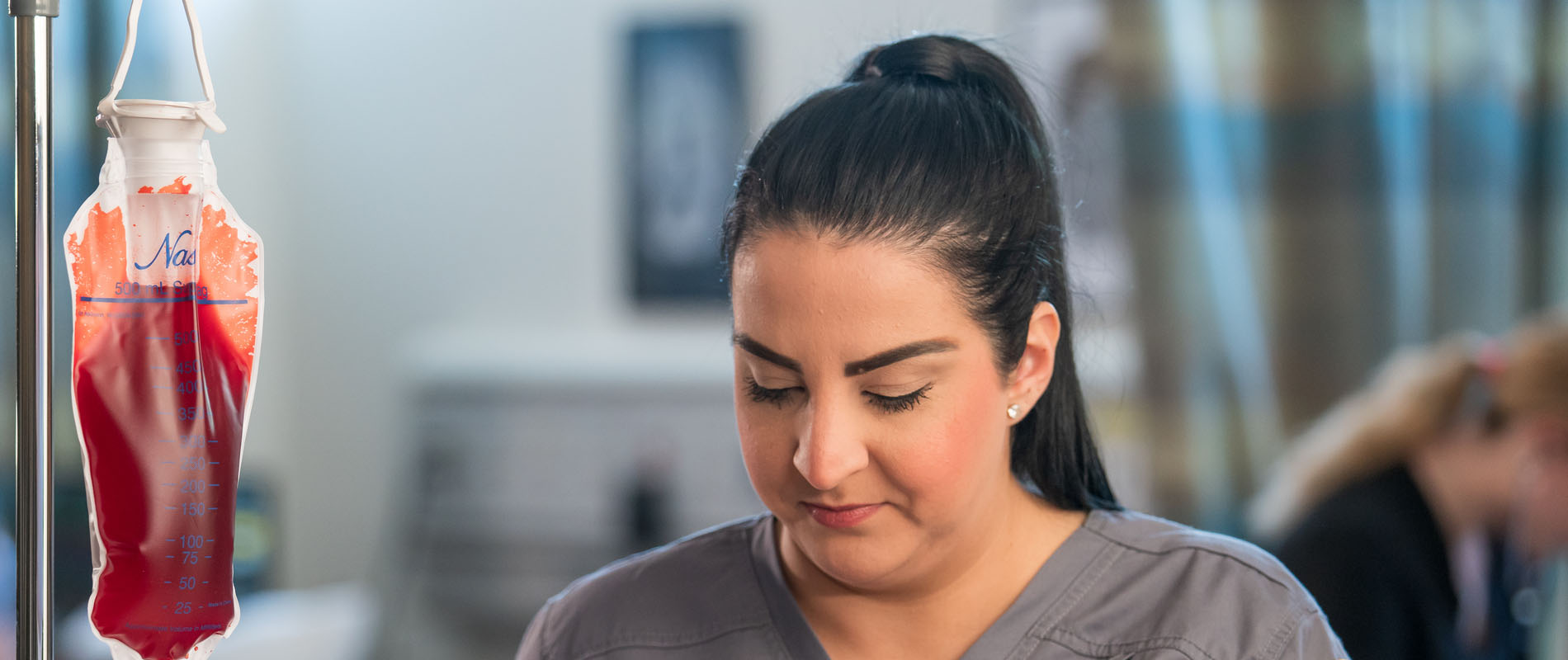
At 16, Houston native Jessica Keyes took a phlebotomy class with her mom and sister and was captivated with the challenge of drawing blood for medical testing.
“I loved that it required a lot of critical thinking. It was always the same procedure, but not every person is the same,” Keyes said.
Over the next 20 years, Keyes earned a phlebotomy certificate from Houston Community College and explored other areas of healthcare, always coming back to phlebotomy. Now, as a phlebotomy instructor at MCC, she’s excited to see how Workforce Pell could make the field more accessible for the next generation of healthcare professionals.
Launched in July, Workforce Pell is a new federal funding source covering tuition and related fees for eligible students pursuing approved noncredit programs that can be completed in under 15 weeks. MCC was one of the first colleges in the nation to have programs approved by the U.S. Department of Education — Phlebotomy Technician, CompTIA+ and Certified Pharmacy Tech — approved in September.
Nationally, employment for phlebotomists is projected to grow 7% from 2025 to 2035, faster than average for all occupations. MCC serves the largest city and fastest-growing county in Nebraska — Omaha and Sarpy County, respectively — and is home to numerous hospitals and clinics. According to the most recent data available from the U.S. Bureau of Labor Statistics, the median pay for a phlebotomy technician is $21.75 per hour.
A major benefit of the program, according to Keyes, is the flexible schedule, which includes night classes for those who are currently working. Students learn how to check basic vital signs, perform venipunctures and prepare blood smears. At the end of the 14-week program, students can take the NHA Certified Phlebotomy Technician certification exam.
Once you’re in the field, Keyes said you’ll never stop learning. She’s worked alongside laboratory scientists and technologists, gaining experience in specimen processing, infectious diseases and healthcare protocols.
Like many MCC pathways, the Phlebotomy Technician program is designed to get students into a career at the entry point with opportunities for advancement with further training that can be completed in shorter intervals.
Keyes has known individuals who have gone on to become medical technologists, scientists, supervisors, nurses and even doctors. For students interested in healthcare but unsure where they want their careers to take them, Keyes sees phlebotomy as a way to get started, gain experience and discover what comes next.
For Keyes, though, the rewards of phlebotomy go beyond mastering the technical skills. There’s also the knowledge that she’s helping patients take the next step in their care.
“There’s a high level of satisfaction when you can successfully draw blood without hurting the patient, but you’re also the beginning of helping a patient get a diagnosis,” she said.
To programs qualify for Workforce Pell funding, they must be at least one year old, meet required clock hours, be completed in 15 weeks or less, and demonstrate strong student outcomes, including a 70% completion rate and a 70% job placement rate.
Visit mccneb.edu/programs/Certified-Pharmacy-Technician to learn more about the program.